Converting PDF to Word: Complete Expert Guide for Perfect Results
Master PDF to Word conversion with our comprehensive guide. Learn expert techniques, avoid common mistakes, and get perfect results every time.
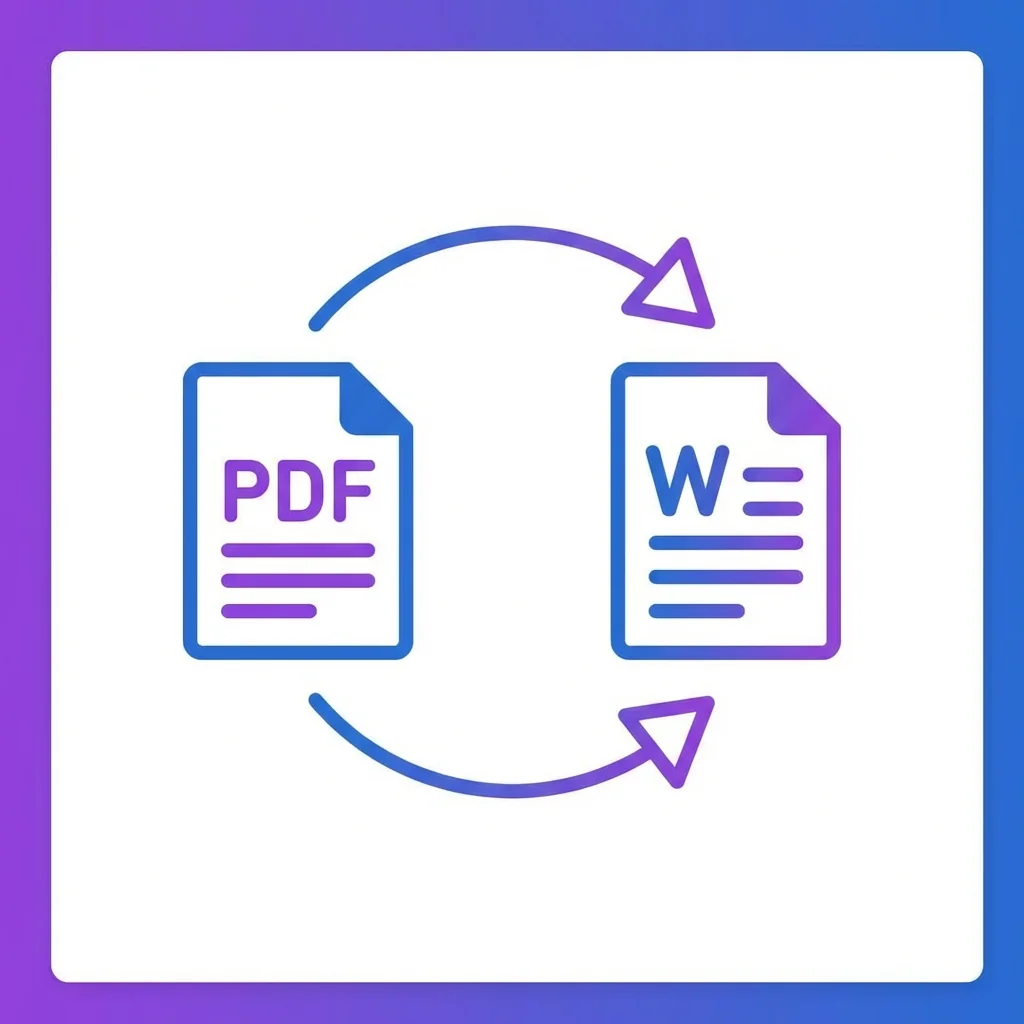
> 📝 Quick Tool Access: Convert PDF to Word Now - Transform your PDFs into editable Word documents instantly!
Understanding the Fundamental Challenge
What Converts Well and What Does Not
Content That Usually Converts Excellently:
| Content Type | Conversion Quality | Success Rate | Notes |
|---|---|---|---|
| Plain text paragraphs | Excellent | 98-100% | Almost always perfect |
| Basic formatting (bold, italic) | Excellent | 95-99% | Rarely needs adjustment |
| Simple headings | Excellent | 95-99% | Heading levels preserved |
| Single-column layouts | Excellent | 95-98% | Clean conversion |
| Standard fonts | Excellent | 95-99% | Common fonts transfer well |
| Bulleted and numbered lists | Very Good | 90-95% | May need minor tweaks |
| Simple images | Very Good | 90-95% | Positions may shift slightly |
Content That Requires Care:
| Content Type | Conversion Quality | Success Rate | Common Issues |
|---|---|---|---|
| Multi-column layouts | Fair to Good | 70-85% | Text may jump between columns |
| Complex tables | Fair | 60-80% | Cell merging, border issues |
| Headers and footers | Fair | 65-80% | May need reconstruction |
| Text boxes | Poor to Fair | 50-70% | Often become regular text |
| Special fonts | Poor to Fair | 40-70% | May be substituted |
| Watermarks | Poor | 30-50% | Often lost or misplaced |
| Form fields | Poor | 20-50% | Usually need recreation |
The Complete Conversion Process: Step by Step
Step 1: Analyze Your PDF First
- Is this a text-based PDF or a scanned image?
- How complex is the layout? Single column or multiple columns?
- Are there many tables, and how complex are they?
- What fonts are used? Are they standard or custom?
- Are there form fields that need to be editable?
Step 2: Choose the Right Conversion Method
For simple documents: Use direct conversion. Upload to our converter, download, and you are done.
For scanned documents: Enable OCR (Optical Character Recognition) before conversion. Without OCR, you will get an image embedded in Word, not editable text.
For complex layouts: Consider converting section by section, or be prepared for manual cleanup.
Step 3: Perform the Conversion
- Upload your PDF to our converter
- Select your desired output format (Word .docx)
- Enable OCR if the document appears to be scanned
- Choose your preferred language settings for OCR
- Start the conversion and wait for processing
- Download the converted file
Step 4: Review and Clean Up
- Check that all text transferred correctly
- Verify table structures are intact
- Confirm images are in correct positions
- Test hyperlinks if present
- Review headers and footers
- Check page breaks and section formatting
Handling Scanned PDFs: The OCR Challenge
Factors Affecting OCR Quality:
| Factor | Impact | Recommendation |
|---|---|---|
| Scan resolution | High | Use 300 DPI or higher |
| Image clarity | High | Avoid blurry or skewed scans |
| Text contrast | High | Black text on white works best |
| Font size | Medium | Very small text is harder to recognize |
| Language | Medium | Choose correct language for best results |
| Handwriting | Variable | Printed text converts much better |
Tips for Better OCR Results:
- If possible, rescan documents at higher quality
- Straighten any skewed pages before conversion
- Improve contrast if the original is faded
- Remove any background noise or patterns
- Select the correct language for the document
Common Problems and Solutions
Problem 1: Text Appears in Wrong Order
Cause: Complex layouts confuse the conversion algorithm about reading order.
Solution: Cut and paste text blocks to rearrange them in correct order. For multi-column documents, consider converting each column separately.
Problem 2: Tables Are Broken
Cause: Complex table structures with merged cells or nested tables.
Solution: Sometimes it is faster to recreate the table from scratch in Word, using the PDF as a reference. Copy the text content and create a new table with the correct structure.
Problem 3: Fonts Look Different
Cause: The original PDF used fonts not installed on your system.
Solution: Check which fonts the original used and install them if available. Otherwise, choose visually similar alternatives from your installed fonts.
Problem 4: Images Are Low Quality
Cause: Images were heavily compressed in the original PDF.
Solution: If you have access to the original high-quality images, replace them in the Word document. Otherwise, this is a limitation of the source file.
Problem 5: Formatting Is Completely Wrong
Cause: The PDF has unusual structure or was created with non-standard software.
Solution: Try converting to plain text first, then manually apply formatting in Word. This is more work but gives you complete control.
Advanced Techniques for Power Users
Technique 1: Selective Conversion
Technique 2: Format Optimization
Technique 3: Batch Conversion
Technique 4: Two-Stage Conversion
When to Convert vs. When to Recreate
| Document Type | Recommendation | Reasoning |
|---|---|---|
| Simple text (1-5 pages) | Always convert | Takes minutes, easy cleanup |
| Medium complexity (5-20 pages) | Convert first, then decide | Try conversion, assess effort needed |
| Complex layout (any length) | Consider recreation | May be faster to start fresh |
| Form-heavy documents | Recreate | Forms rarely convert well |
| Design-heavy documents | Recreate | Layout is too critical |
Frequently Asked Questions
Does PDF to Word conversion keep the original formatting perfectly?
Can I convert a scanned PDF to an editable Word document?
Why does my converted document look different from the original PDF?
Is the converted Word document fully editable?
How do I convert a password-protected PDF?
What other formats can I convert PDF to besides Word?
How long does conversion take?
Is my document safe during conversion?
Best Practices Summary
- Analyze before converting - Understanding your PDF helps set expectations
- Use OCR for scanned documents - Do not skip this step for scanned PDFs
- Always review results - No conversion is perfect; check the output
- Keep the original - Never delete your PDF until you are satisfied with the Word version
- Be realistic - Some documents convert better than others
- Know when to stop - Sometimes recreating is faster than endless fixing
Conclusion
📝 Convert Your PDF to Word Now
- PDF to Excel - Convert tables to spreadsheets
- OCR PDF - Make scanned PDFs editable
- Edit PDF - Edit PDF directly without conversion
A specialized team in PDF tool development and educational content. We help you work with PDF files efficiently through free tools and comprehensive tutorials.
🚀 Try Our Free PDF Tools
29 completely free tools. No registration. 100% secure processing in your browser.